I 1 A revelation from Yahshua Christ which Yahweh had given to Him to show to His servants the things which are necessary to happen quickly, and He having sent explained through His messenger to His servant Iohannes, 2 who bore witness to the Word of Yahweh and the testimony of Yahshua Christ, as many things as he had seen. 3 Blessed is he reading and those hearing the words of the prophecy and keeping the things written in it, for the time is near.
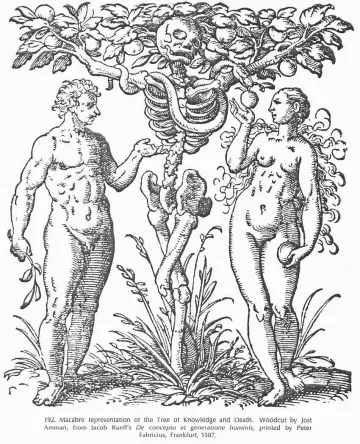
II “1 For the messenger of the assembly in Ephesos, write: Thus says He commanding the seven stars in His right hand, He walking in the midst of the seven golden lampstands: 2 I know your works and your toil and patience, and that you are not able to bear evils, and have tried those calling themselves ambassadors yet they are not, and you have found them liars, 3 and you have patience and have endured on account of My Name and have not grown weary. 4 But I hold against you that you have left your first love. 5 Therefore remember from where you have fallen and repent and do these first works. But if not, I shall come to you and I shall remove your lampstand from its place, if you should not repent. 6 This other thing you have: that you hate the works of the people-conquerors, which I also hate. 7 He having an ear must hear what the Spirit says to the assemblies! To he who prevails I shall give to him to eat from the tree of life which is in the paradise of Yahweh.
Ephesos: The word is apparently from ephesis, which is a word with a wide variety of meanings. It may be a throwing, hurling or shooting, or in another sense permission or license. The name may also be appetite or desire, and so it may mean desirable. There was a famous festival held there in honor of the idol Artemis from the earliest times, and the town may have grown up around that, since if the name does refer to throwing and hurling, it seems to be named after the games. This town was long famous for its large but roofless temple of Artemis, whom the Romans called Diana.
III “1 And to the messenger of the assembly in Sardeis, write: Thus says He having the seven Spirits of Yahweh and the seven stars, I know your works, that you have a name that you may live, and you are dead. 2 You must be alert and establish the remaining things which were about to die, for I have not found your works completed before My God. 3 Therefore remember how you have received and have heard and keep and repent. Then if you should not be alert, I shall come as a thief, and you may not know what hour I shall come upon you. 4 But you have a few names in Sardeis which have not soiled their garments, and they shall walk with Me in white, because they are worthy. 5 He who prevails thusly shall be cloaked in white garments and his name shall not be wiped out of the Book of Life and I shall profess his name before My Father and before His messengers. 6 He having an ear must hear what the Spirit says to the assemblies!
Image
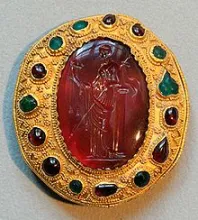
Carnelian pendant of Ptolemaic queen
Sardeis was the capital city of ancient Lydia. It was an important city to the Persians, and held by them throughout the Classical period. The original Lydian cities were all said to have been destroyed by the Persians in the 6th century BC, and until the time of Alexander the Persians held most of Asia Minor. Sardeis was named after the usually transparent-reddish or transparent-brownish sardion stone, which is called carnelian by the English. This stone was used in the making of jewelry by the Phoenicians, Greeks and Romans, and in the making of cylinder seals by the Assyrians. It was also widely used by the Romans for signet seals, which may add to the depth of the meaning here, since there is apparently question as to whether these Christians are indeed as sealed, or assured, of their salvation as they seem to think that they are. The color of the stone can vary greatly, from pale orange to near-black, and perhaps that is also why this assembly was picked out for this message. The Christians of Sardeis were not admonished for having committing any absolute wrong, but they were warned that they should stay alert and be sure to fulfill their Christian obligations. It seems that as the Sardian stone has a wide range of colors, the people of assembly at Sardeis had a wide range of attitudes. The Sardians had the Word, but seem not to have acted on it, having the works too. As James warns us in his epistle, “Faith without works is dead”, that is also the message here.
IV 1 After these things I looked, and behold! A door being opened in heaven, and the first voice which I had heard as a trumpet speaking with me saying “Come up here, and I shall show to you the things which are necessary to happen.” After these things
V 1 And I saw at the right hand of Him sitting upon the throne a scroll, written on the inside and on the back, having been sealed with seven seals. 2 And I saw a mighty messenger proclaiming with a great voice: “Who is worthy to open the scroll and to loosen its seven seals?” 3 And no one was able in heaven nor upon the earth nor under the earth to open the scroll or to see it. 4 And I wept much, because no one is found worthy to open the scroll or to see it. 5 And one from among the elders says to me: “Weep not! Behold! The lion of the tribe of Judah, the root of David, has prevailed to open the scroll and its seven seals!”
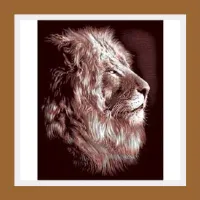
Yahshua Christ is the Lion of Judah and He is also the root of David. This is the Christian Paradox, and it has been argued since the time of Christ: For that reason Christ asked the Pharisees “If David then call him Lord, how is he his son?”, as we see recorded at Matthew 22:45. That He is God, Yahweh Himself having come as one of His own sons, is the only way that He could possibly be both the Root and the Offspring of David (cf. Isaiah 11:1, 10, Rev. 22:16). Of all of the sons of Adam, only Yahshua is worthy to open the seven seals, because only Yahshua is blameless and only Yahshua is God. Only God Himself can see the future.
Here in Chapter 6 there is the famous vision of the Four Horsemen of the Apocalypse. It is evident that these four horsemen represent four stages in the rise and fall of the Roman Empire. It can be argued that this vision of the four horsemen may mean something different, however that argument becomes less plausible once the chapters of the Revelation which follow are examined.
VII 1 After this, I saw four messengers standing upon the four corners of the earth, holding the four winds of the earth that a wind would not blow upon the earth nor upon the sea nor upon any tree. 2 And I saw another messenger ascending from the rising of the sun having the seal of Yahweh who lives, and he cried out with a great voice to the four messengers to whom it had been given to do wrong to the earth and the sea, 3 saying: “Do not do wrong to the earth nor to the sea nor to the trees, until we should seal the servants of our God upon their foreheads!”
4 And I heard the number of those being sealed, a hundred forty-four thousand, being sealed out of all the tribes of the sons of Israel:
VIII 1 And when He opened the seventh seal, there was silence in heaven for about half an hour. 2 And I saw seven messengers who stood before Yahweh, and they had given to them seven trumpets. 3 And another messenger having a golden censor came and stood upon the altar, and much incense had been given to him, that he may offer it with the prayers of all the saints upon the golden altar before the throne.
IX 1 And the fifth angel sounded the trumpet, and I saw a star from heaven fallen to earth, and to him had been given the Key of the bottomless pit. 2 And he opened the bottomless pit, and smoke ascended from the pit like the smoke of a great furnace, and the sun and the air had become darkened from the smoke of the pit. 3 And from the smoke locusts came out into the earth, and authority had been given to them like the scorpions of the earth have authority. 4 And it had been spoken to them in order that they do not injure the grass of the earth nor any green thing nor any tree, except those men who do not have the seal of Yahweh upon their foreheads. 5 And it had been given to them that they should not kill them, but that they shall be tested for five months, and their torment is as the torment of a scorpion when it strikes a man. 6 And in those days men shall seek death yet they shall not find it, and they shall desire to die yet death flees from them.
Howard Rand and Bertrand Comparet have both identified this passage as a depiction of the rise of Mohammedism and the Arab conquests of the formerly White regions of Mesopotamia, the Levant, and the northern coast of Africa. I believe that they were absolutely correct. As an aside, it is also evident that Mohammed is the “little horn” of Daniel Chapter 8, This little horn is not to be confused with the little horn of Daniel Chapter 7, which we shall see when we get to Revelation Chapter 13 refers to the Emperor Justinian. So it may be seen that just as Daniel in Chapters 7 and 8 prophesied of Justinian, and then of Mohammed, so does the Revelation in Chapters 8 and 9. At Daniel 8 this is what it says in part, which I believe correlates with this passage in the Revelation:
X 1 And I saw another mighty messenger descending from heaven cloaked in a cloud, and a rainbow upon his head and his face like the sun and his feet like pillars of fire, 2 and holding in his hand a small book having been opened. And he set his right foot upon the sea, then the left upon the land, 3 and he cried out in a great voice just as a lion roars. And when he cried out, the seven thunders uttered their voices. 4 And when the seven thunders uttered, I was about to write, and I heard a voice from out of heaven saying “I have sealed the things which the seven thunders have uttered, and you should not write these things!”
In an 8th century letter by an English bishop named Cuthbert, we have the following where he is speaking of Bede, the famous English cleric and historian, and we must hear it bearing in mind that these men are English Roman Catholic bishops: “In those days, moreover, beside the lessons which we received from him and the chanting of the Psalms, there were two works very worthy of mention which he endeavoured to accomplish, to wit the Gospel of St. John, which he translated into our [Saxon] tongue for the profit of the Church, and certain extracts from the books of bishop Isidore....” So we see that translating the Bible, or portions of it, was a wholly acceptable endeavour undertaken by Romish Catholic priests in the 8th century AD. In fact, in his Ecclesiastical History, Bede often described men who were well versed and who read the Scriptures not only in Latin, but also in Greek. Yet shortly after these times, the Romish Church turned in a direction which was absolutely contrary to the Spirit of Scripture, and it made an effort to repress the Word of God, and keep it from the ears of the people.
Pope Innocent III stated in 1199: “... to be reproved are those who translate into French the Gospels, the letters of Paul, the psalter, etc. They are moved by a certain love of Scripture in order to explain them clandestinely and to preach them to one another. The mysteries of the faith are not to be explained rashly to anyone. Usually in fact, they cannot be understood by everyone but only by those who are qualified to understand them with informed intelligence. The depth of the divine Scriptures is such that not only the illiterate and uninitiated have difficulty understanding them, but also the educated and the gifted.” (Denzinger-Schönmetzer, Enchiridion Symbolorum pp 770-771, from Bridging the Gap - Lectio Divina, Religious Education, and the Have-not's by Father John Belmonte, S.J.
XI 1 And he had given to me a reed like a staff, saying “Arise, and measure the temple of Yahweh and the altar and those worshipping at it. 2 And the court outside the temple leave out that you should not measure it, because it has been given to the heathens, and the Holy City they shall trample for forty and two months.
God does not dwell in a house built with hands, but He dwells in us, and therefore temple of Yahweh is an allegory for His people in the world. The 42 months is the same as the 1260 days which follow in verse 3 below. 42 times 30 days equals 1260 days, and we shall see the same measurements of time again – though not necessarily of the same periods – in Revelation Chapter 13 where Daniel Chapter 7 shall also be discussed. The word heathens does not necessarily mean to describe aliens. It is basically nations or people, however I have translated it as heathens whenever I felt that the word was used to describe a people or nation in opposition to the will of God or apart from those people seeking to follow the will of God. Here we see a vision of the core of His people Israel – the temple of God where Yahweh dwells - who would be separated from the beast church, while those outside would continue to be trampled by it. This does not mean that there are no Israelites in those nations which remained Catholic after the Reformation, but rather it is only an allegorical picture so that we may look back at the history of our race and understand what it is that has happened to us.
XIV 1 And I looked, and behold! The Lamb stood upon Mount Sion, and with Him a hundred forty-four thousand having His Name and the Name of His Father written upon their foreheads. 2 And I heard a sound from out of heaven like a sound of many waters and like a sound of great thunder, and the sound which I heard like lyre-players playing on their lyres. 3 And they sang a new song before the throne and before the four living creatures and the elders, and no one was able to learn the song except the hundred forty-four thousand, those having been purchased from the earth. 4 These are they who have not been defiled with women, for they are virgins. These are they who follow the Lamb wherever He should go. These have been purchased from among men, a first-fruit for Yahweh and for the Lamb, 5 and in their mouths a lie is not found: they are blameless.
Here we see a vision of the 144,000 that were first mentioned in Revelation Chapter 7. These were those men who men were sealed by Yahweh – kept from the troubles and pollutions of this world and from the wrath that was to come upon the Roman empire, which was the context of Chapter 7, and we see them again here. Some commentators have claimed that these will be the government of the Kingdom of God, however that idea is not found in the text. Others have claimed that these are the Kingdom of God, however it is clear in the text that these are only the first-fruits of those whom He has purchased – the first-fruits of the children Israel and, as it is evident in Chapter 7 at verse 9, they are followed by an innumerable multitude who were clothed in white garments. The promise to Abraham was that his descendants would be an innumerable multitude, as the stars of heaven and as the sand of the seashore, and not a mere hundred and forty-four thousand (Genesis 22:17, 32:12 et al).
XV 1 And I saw another sign in heaven, great and wondrous, seven messengers having the seven last plagues, that in them the wrath of Yahweh is fulfilled. 2 And I saw like a glass sea mixed with fire, and those prevailing from the beast and from his image and from the number of his name standing upon the glass sea holding lyres from Yahweh.
XVI 1 And I heard a great voice from out of the temple saying to the seven messengers: “Go, and pour out the seven bowls of the wrath of Yahweh into the earth!”
XIX 1 After these things I heard like a great sound of many multitudes in heaven, saying “Praise Yah! Salvation and honor and power are of our God! Because His judgments are righteous and true, since He has judged the great whore who has ruined the earth with her fornication! And He has avenged the blood of His servants from her hand!” 3 Then they spoke a second time: “Praise Yah, that her smoke ascends for the eternal ages!” 4 And the twenty-four elders fell down, and the four living creatures, and they worshipped Yahweh who sits upon the throne, saying: “Truly! Praise Yah!” 5 And a voice came out from the throne, saying: “Praise our God, all His servants, and fear Him, small men and great men!”
It was said at the beginning of chapter 17, that the whore is Israel in apostasy from God, and that is true. But here the whore seems to be referring to the beast also – to Mystery Babylon, and that is also true. The whore, the people of Israel, having joined herself to the beast, has become “one flesh” with the beast. So while at the beginning of John's image of the whore, at the beginning of chapter 17, the whore and the beast are distinguished, now they are no longer distinguished. Paul wrote at Ephesians 5:31-32: 31 "For this reason shall a man leave father and mother and shall join to his wife, and the two shall be for one flesh.” 32 This mystery is great, and I speak for Christ and for the assembly.” Paul was talking about husband-wife relations, however Israel is supposed to be the wife of Yahweh, and a separate people not joined to any beast. It may be postulated, that one of the mysteries of iniquity is this: that without the whore, the beast would have no real power at all! The dragon has always ruled through the cooperation of members of our own race whom it was able to compromise and corrupt. Adam's compromise was the second sin in the Garden of Eden, fornication being the first. All of the world empires that the dragon came to control, began as Adamic nations.
XXII 1 And he showed to me a river of water of life, bright as crystal, coming out from the throne of Yahweh and of the Lamb. 2 In the middle of her street and with the river on the one side and the other is the tree of life producing twelve fruits, yielding each of its fruits by month, and the leaves of the tree are for the service of the Nations.